

This month’s energy current is a share from writer Tom Kerr. We’ve greatly enjoyed Tom’s writing over the years and think you will enjoy this timely piece. This article was originally published by Walden Publishing on July 9, 2017.
______________
Net Metering: Take the Power away from the Utility Companies
By Tom Kerr
I’ve known Dave and Sierra Hollister since their adult kids were knee-high to a grasshopper. They made history in my home state of North Carolina …. Blazing a pioneering trail for folks like you and me who want to live more freely, independently, and self-sufficiently.
They made it possible for everyone here to stop buying electricity from utility companies.
“In 1996, we negotiated the first Net Metering Agreement in the state,” Dave told me, “and our house was the first officially net-metered house in North Carolina.” This groundbreaking achievement set the stage for others to follow, paving the way for a widespread adoption of renewable energy solutions in the region. However, as the landscape evolved, many began to voice concerns about net metering policy changes in 2025, prompting discussions about the sustainability and future of such agreements. Dave noted that these changes could significantly impact both homeowners and the energy market as a whole.
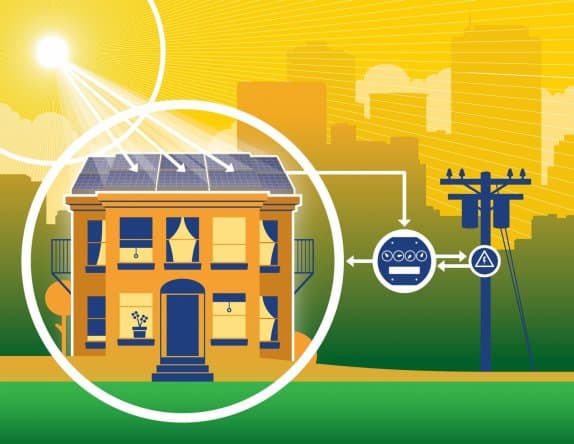
Net metering means you generate your own off-grid power, and what you don’t consume you give back to the grid for others to us. This system not only promotes energy independence but also helps reduce overall energy costs. In various regions, policies governing net metering can vary significantly, impacting how much credit a homeowner receives for the energy they supply back to the grid. For those seeking clarity on the subject, ‘net energy metering explained‘ is essential to understanding the benefits and regulations that come with harnessing renewable energy sources. Furthermore, recent developments have spotlighted the importance of staying informed about local regulations, such as the French Broad Electric net metering update. These updates can influence the financial benefits homeowners receive and are crucial for maximizing the advantages of solar energy systems. Engaging with local utilities and understanding these changes can empower consumers to make informed decisions about their energy consumption and sustainability efforts.
In exchange, the utility company give you credit on your monthly statement. Because he negotiated that arrangement, Dave hasn’t paid for electricity in 20 years. He has invested those savings to raise his kids, grow an honest business and live a less stressful life.
But if you generate more electricity than you consume and give it to the utility company, you ought to get paid for it in real cash.
After all, if you buy a rake, only to discover that your wife already bought that one that morning, you return it for a full refund … not just store credit.
But utility companies oppose that kind of fair and square arrangement.
The only way they let you sell energy for cash is through a separate, exclusively dedicated metering system … one that is considerably more expensive.
Dave is still fighting to free up the grid. He owns a leading solar business, Sundance Power Systems, so he often sits across the table from utility companies and regulators to advocate for your rights.
“Lately the utilities feel threatened,” he says, “and are pushing back hard. They put out false propaganda, label solar users as bad people, and mislead consumers. To ensure economic democracy, America needs a National Grid Bill of Rights.”
But Dave has also seen the fear in the eyes of the greedy oligarchs.
They can protect and control a power plant, power lines, and meters. But you cannot control solar power because sunshine is everywhere, for free. “They hate that, and it scares them,” Dave says.
Right after I talked to Dave, my power went out … and the timing was spooky. But as I turned on my solar lamps and plugged into my battery-powered backup, I laughed … imagining the oligarchy trembling in the darkness they created but cannot sustain.
Will you be laughing, when the lights go out?